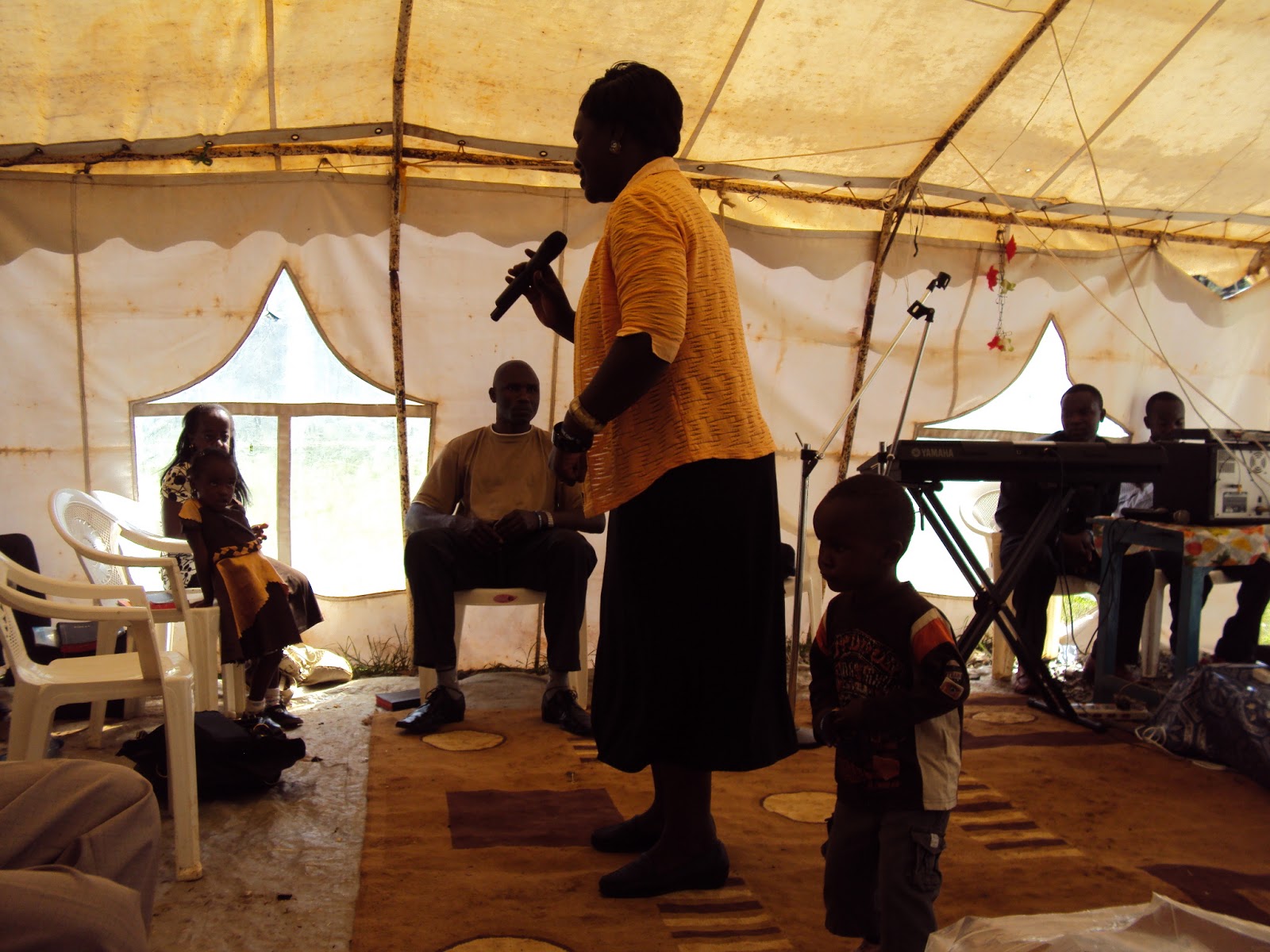
Tom with kids in Kuwait

Tom with kids in Kuwait
Showing posts with label leadership. Show all posts

Monday, November 17, 2014

Are our kids aiming for the basket or the popcorn machine?


When our kids were young, we cheered them on as they tried to walk.  They might take a step or two and fall to the ground, but we applauded their efforts.
At some point they learned to walk.
If they were supposed to walk to school and ended up at the neighborhood bar for a couple of beers instead of the multiplication tables test, we did not applaud.
When they were old enough to pick up a baseball, we cheered when their arm moved and the ball went somewhere.
At some point, they learned to throw.
We didn’t cheer when they threw the ball over the fence to a cute girl when the play was at home.
Then came driving.  We cheered when we survived the first lesson with our daughter.  We cheered when she hit the brakes and stopped albeit 100 yards in advance of the stop sign.
We applauded when she somehow passed the driving test and was licensed.
But we didn't applaud when she was so into her text that she greeted the telephone pole head-on, fortunately at only 15 miles per hour.
As our children learn and grow, we applaud a wide range of efforts early on.  As they mature and should acquire skill, we reinforce fewer and fewer choices.
You can’t aim for the band and hope to sink a basket.  You must focus on putting the ball through the hoop.
We get that, well, sort of.
We start with a wide range of things that we reinforce as valuable or values in the lives of our children.
Good.
Nice.
Friendly.
Polite.
Happy.
Well mannered.
Clean vocabulary.
Good appearance.
Positive first impressions.
Helpful.
Britches pulled up to the waist.
We define some parameters for good living, but sometimes we just leave out those which are most important.
Seeking God.
Following Jesus.
Loving one another.
Being faithful to our Lord.
Desiring to be in right standing with God.
Trusting God over everything else we have learned in the world.
We would go crazy if our child aimed at the concession stand instead of the basket but we seem ok when they seem to be doing just fine by the rules of the world but we have not brought them up in the way of God.
The school seems happy.
The police are not knocking on the door.
They are not spending all night playing video games.
They don’t seem to be bad kids.
But can they answer the question, “Why are you living on this earth?”
What purpose does your life have?
Do you know what special gifts God placed inside of you?
How will you be a blessing to others?
These are not questions that our kids are likely to pose to themselves.  Someone must prompt them.
That someone should be mom or dad.
More often it is the preacher or youth leader or maybe a good friend.
What are our kids and grandkids aiming at?
The basket?
The popcorn machine?
They have no aim at all?
I love the picture of the two young tykes dressed up as adult farmers.  One says to the other, “Ya ain’t got Jesus, ya ain’t got nothing.”
It really is just about that simple, but are we teaching and leading our children to know this?
Will we just let them roam through this life without a roadmap or compass?
Will we just hope they happen upon the King of Kings?
Will we just hope for the best?
Or will we be parents and grandparents and aunts and uncles who care enough to lead the next generation to Christ?
Who is leading our children now in our absence?
You know but don’t want to admit it.  Our societal norms are not the norms of God.  They are not God’s kingdom and his righteousness.
So if we do not lead our children to Christ, the world will lead them away from him.
Are you willing to accept that outcome?
Here’s the thing.  We are promised that if we draw closer to God, he comes closer to us.
Here’s my corollary.  If we are leading our children closer to God, God is getting closer to them as well.
Parentling.
Leadership.
Discipleship.
If you were a part of bringing a child into this world or have taken custody of a child or have adopted a child, then you signed up for all three of these:  parenting, leadership, and discipleship.
Point your child in the right direction.
Lead you child towards God.
Encourage your child as he or she draws nearer to God.
Bring up a child in the way he should go.
Bring up a child in the way she should go.
Walk with your child until he or she is your brother or sister in Christ.
This is the destination of parenting—to know your son as a brother in Christ.
This is how you know you have been on the right path—your daughter is now your sister in Christ.
Someone will lead them to be a brother or sister to Christ.  We have enough ambassadors of Christ among us to find them and lead them to the Name that is above all names.
The question is will you be a brother and sister in Christ with your son or daughter, or will they reach this relationship and not know you?
At some point, we send our children into the world.
The question is, will we lead them to Christ first.
Don’t leave this most vital work exclusively in the hands of others.
Lead your children to Christ.
Lead them!
Lead them today and every day.

Lead them!

Wednesday, May 22, 2013

Mission to Kenya - To Equip the Saints

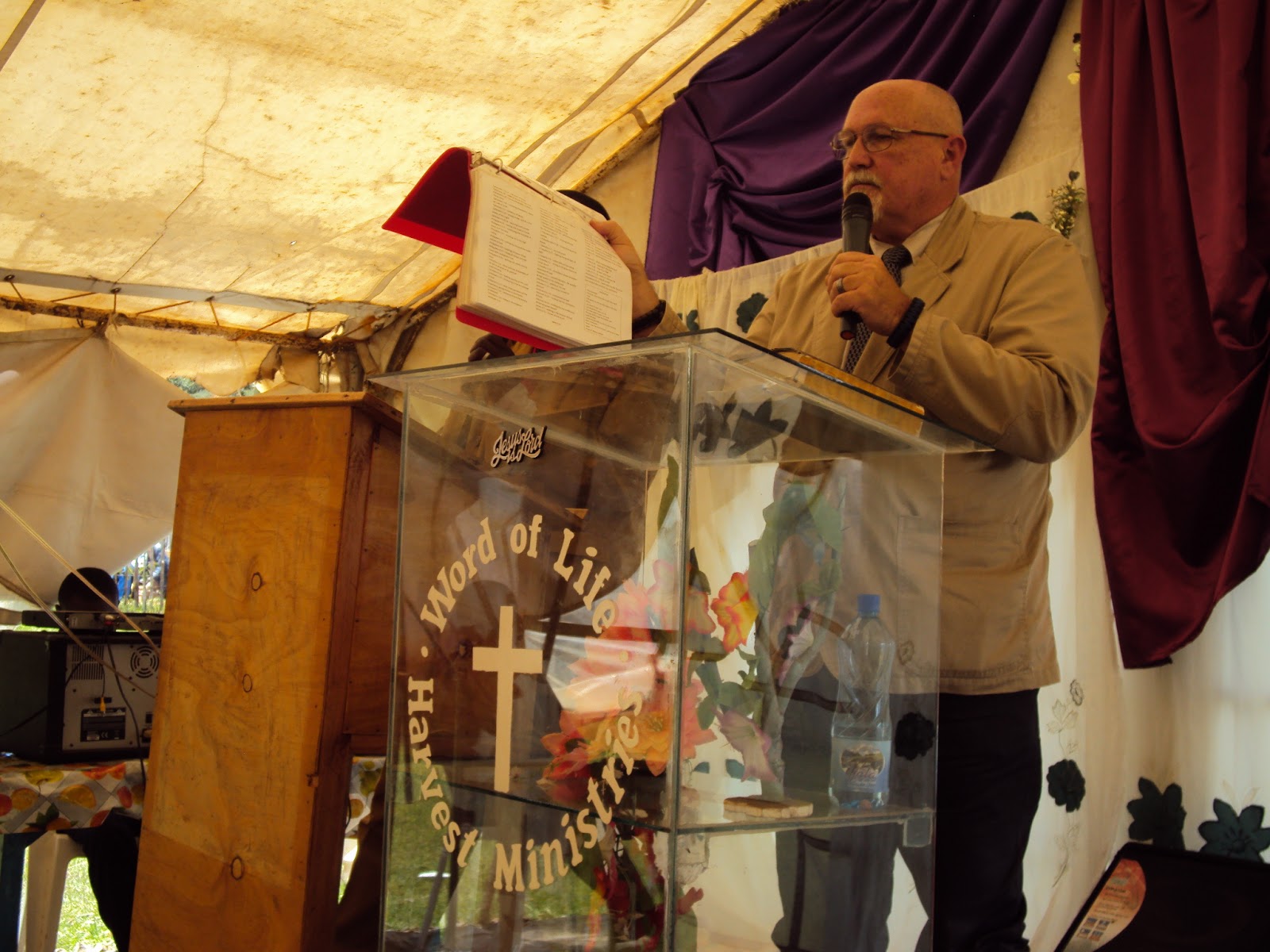
From 4 May to 16 May 2013, Tom Spence and Rick Ellis deployed to Kenya from Burns Flat, Oklahoma to lead a conference of pastors and church leaders in the areas of evangelism, discipleship, and leadership.  The two also visited a refugee camp, two schools for orphans, and some homes.

These are pictures from Eldoret, Kenya and the surrounding areas.


Thursday, April 28, 2011

Leadership and Training are Intrinsically Linked.

AND THE DOOR SHALL BE OPENED

            Training and leadership are linked.  They should be inseparable, but often these  essential functions are not only kept apart, their segregation is institutionalized.  I served over 20 years in the United States Marine Corps.  That is to say, I've led a sheltered life, at least from a trainer's perspective.  The Marine Corps holds training as essential to its success.  Leaders not only endorse good training programs, but  conduct much of the training themselves. 
            Marines expect their leaders to train them in essential skills and lead them using those skills.  Technology has thrown some new wrinkles into this paradigm, but its basics still hold true.  Because of material fielding plans, a young Marine just out of school may be the only individual in a battalion that knows how to use a new piece of equipment.  In these cases, the unit leaders facilitate their own training and the training of others using the junior's expertise and the senior's facilitation skills. The link between leadership and training is maintained.

            As a Marine, I value tradition.  As a professional trainer, I appreciate validation of traditional relationships more.  This short article examines three instances where leadership and training were estranged and pleads for their reunion in today's organizations. 

The Farmer and the Marine

In the summer of 1987, I was assigned as the Inspector-Instructor in Des Moines Iowa.  I was the active duty commanding officer assigned to train reservists and execute other such functions as are required of an independent command.  In the course of a few months, I had drill attendance up near 100% and had successfully completed winter training in the Sierra Nevada Mountains with the reserve unit.  By January 1998, I was feeling really good about this new assignment.  That changed one February evening.  I was on my way home from another late night at my office and stopped in a convenience store for a cup of coffee.  As I was leaving the store, a farmer was walking in.  I presumed an affinity between two men that had long days and said, “hello.” He replied, “How does it feel to get paid for doing nothing?”    I opted for rhetoric over violence and terminated this encounter with, “I wouldn’t know.”

Over the next few days, I asked my staff about what the community thought of them, not prejudicing them with an account of my experience.  Outside of our Toys for Tots campaign, I was told that we were getting a cold reception throughout the city.  I talked with my reserve counterpart and he said there are no active duty bases in the state, and the prevailing opinion was that the state gets nothing in the way of business or industry for its tax dollars that go to defense.  That was a tough pill to swallow, and especially tough having grown up several years on a farm.  I had always heard that God understands farmers and Marines—an expression used because both groups often found themselves somewhere other than church on Sunday morning.  I presumed a special relationship existed between the two.  I was wrong.

I discovered that I was in farm country again, but this time with a substantial public affairs mission set before me.  For the most part, Marine officers are content to never speak the words public affairs.  It didn’t contribute directly to combat readiness.  What good was it?  I was no longer afforded the sanctuary of that naïve belief.  Fortunately, there was a huge event called the RAGBRAI—the Register’s Annual Great Bicycle Ride Across Iowa.  I put together a team, ordered riding shirts, issued over a hundred press releases, and fully promoted the Marine Corps’ participation in this moving city of about 20,000 people.  We would display our colors, talk with riders, and provide a static display in each campground. 

I perceived no training requirement.  I learned how to ride a bike long ago.  A couple of reservists that were avid cyclists occasionally stopped in and told me that I needed to do some training.   I told them that I was running 7 miles a day in my flak vest through the hills of Des Moines.  I think I can handle riding a bike. The night before the event, I bought a bicycle.  I would have nothing but the finest—the $79 special at Target.  The first day of the ride was 53 miles of hills.  It was the shortest and easiest day of the week. For all of the things the Marine Corps ever put me through—I never felt worse than I did that afternoon. I was using muscles that I didn’t know I had and felt as though a bull had gored me in the rear end.  I was also asking myself whose crazy idea was this anyway?

One of the officers on the team knew something about cycling and told me that I should raise my seat and add some toe straps to the pedals.  My initial response was that he was either crazy or sadistic.  I had seen all varieties of bicycles that first day, many with the straps he described or a shoe that served as a pedal.  I was sure that they had some value, but not at all sure it outweighed the risk of being attached to your bicycle amidst a mass of moving humanity.  My friend threw up his hands in surrender and was ready to let me pay another day’s tuition at the school of hard knocks when I finally said, “OK, what do I need to do?”  I got my crash course on pushing and pulling on the pedals and made the profile bar leap. By the third day of the ride feeling returned to my rear end.  At the ride’s conclusion, I was ready to head across the next state.

I got the training I needed, but not without a lot of pain.  What I needed was for my friend to grab me a month or two before this ride and say let’s go for a bike ride and see if there’s anything I can help with.  I didn't need him to be subtle or tactful.  I needed him to be direct and stick with what he knew to be true.  It was not something he was expected to do; however, it was something I needed.  What I needed to be a successful leader was leadership from my trainer.


Segregation of HR and State


            A few years later, I found myself one of 6 Marines assigned among about 1000 civil service workers and encountered for the first time something called the Human Resources Office.  After a few months as a program manager, I realized that my teams needed significant training in negotiation and creativity and decided to employ what was surely a repository of resources.  I provided HR with my mid range plan—where my programs needed to be in 15 years and how I would prioritize my resources to get there. 

            Human Resources responded that there were standard packages of training and the best they could do for my negotiation requirement was a one or two hour class.  The Human Resources Office steered well clear of my identified need for creativity.   The prevailing attitude was if what they offered overlapped with what you needed, it was a success and required no further exploration.

            The absence of HR participation did not stop me from getting  excellent training.  I found quality vendors with experience in the right areas; however, the absence of HR interest in my program direction relegated them to a department of a last resort.  Other areas committed to program success—logistics, contracting, engineering, and field representatives—took the plans, guidance, and direction for action.  Action is an all-encompassing word, but did not mean that these competencies concurred in every aspect.  They disagreed, identified critical areas of risk, and offered alternatives.  This is what I expected from the human resources domain, but did not receive because of an institutional segregation between training and management.  

            If there is one piece of training that I think trainers need to close the gap with those leading an organization, it’s Risk Assessment and Management.  Trainers need to be able to work through a fault tree or a decision tree with their management counterparts.  At multiple points in most projects, there is going to be a place where the trainer can say, “I can reduce that risk with training, or the 20K spent on training at this point can save you 200K in additional work years or outsourced labor.”  Risk is the language of leadership.   Learn the language.

What do Leaders need to do to get HR involved in program success?  Put it in writing.  There is nothing like promulgating a written document to bring the real issues out of the woodwork—some of those are training issues.  Trainers should never make the mistake of believing that once it's in writing, it can't be changed.  Effective leaders expect reaction to their written words and live in world where the ink seldom dries.   Absent regal appointment or nepotism, the leader that holds inflexibly to his written guidance is due for a career change.  Good leaders expect to make adjustments and some of those adjustments require training.  Keep the HR department on your distribution list.


The Crane


            One of the prerequisites of an expedited retrograde of allied forces at the end of the Gulf War was the emplacement of a United Nations force in Iraq and Kuwait.  In 1991, I found myself the senior Marine Officer in the United Nations Iraq-Kuwait Observer Mission (UNIKOM).  The duty consisted of about a week in the DMZ followed by one or two days of rest in Kuwait City.  The destruction of Kuwait City during the war was significant, but not so significant as the speed and visibility of the post war restoration.  

            I was driving to Kuwait City from the DMZ with a vehicle full of officers from other contingents.  After traveling a few miles, I asked the Indian officer seated in the front passenger position where his contingent apartment was.  He said it was near the big crane.   I replied that must be Rumaithiya.  The Russian in the back seat said that he thought it was near Salmiya, and in turn the Polish officer indicated that it was between the Fourth and Fifth Ring Roads.   The areas we had described were all in the same locale; however, the Indian officer repeated his request to "just go to the big crane!"  The atmosphere in the vehicle tensed, as it was apparent that our offerings made this officer uncomfortable.  We drove for another fifteen minutes in total silence until the Indian officer realized the temporary nature of his landmark and blurted out, “I hope they didn’t move that crane.”

            The relief in the vehicle was evidenced by the infectious laughter for the rest of the ride.  Everyone reached their destinations successfully and I reached some conclusions on leadership.  We rightfully expect vision and goals out of our leaders, but often attach an unnecessary burden on the leader to create this vision within some privy council at the corporate or program level--or alone.   Only with full participation of an organization—especially trainers—can leaders set a steadfast course.  We also do not account for acceptance time.  When a leader is challenged by another possibility or course of action, we should not expect an immediate decision.  If we insist on such immediacy, we widen the gulf between trainer and leader. 

Knock, and the door shall be opened


            Leadership and training belong together.  When  separated, they must be quickly reunited.  Unfortunately, this reunion often resembles a full length love story with the admixture of comedy and tragedy.  The trainer knocks and the leader doesn't open or the leader stands with the door wide open and yet no guests come.  The organization that encourages this strange courtship ritual and sends both parties back to the door early and often will certainly reap its rewards.


Thursday, February 17, 2011

Best Leadership Practices for Christians

What is the difference between leadership and Christian Leadership.  Only a matter of a few words.

What words?

Follow me and go.  Read more...